Why Symbolism Matters — And What Chicken Says About Us
Why is symbolism important?
It’s the mechanism by which meaning is created and communicated. The symbols we collectively acknowledge and respect reflect our culture. Whether consciously or not, we are constantly signaling our values—to each other and now to the entire world through modern communication platforms.
We are living in an era of information overload. Years of global disruption have reshaped how we think about health, community, and daily life. Conversations around wellness have taken center stage, often blurred by competing narratives and agendas.
So it’s worth asking: What symbols dominate our lives today?
The stories we tell are increasingly condensed into fragments: posts, reels, short-form content. Within those fragments, symbols carry meaning. Whether in music, film, or social media, they help us interpret the world around us.
But as communication becomes more digital, what happens to how we connect in real life?
The Symbols We Accept
As a culture, we’ve begun to shift away from traditional symbols—faith, community, shared rituals. In their place, new symbols are rising:
- Status
- Luxury
- Consumption
- Visibility
Much of modern communication revolves around who has what. But not all symbols are out of reach. Some are universal. Some are shared daily. One of the most powerful and overlooked is food.
The Dinner Table as a Cultural Symbol
A meal tells a story. It reflects where we’ve been, what we value, and who we surround ourselves with.
The dinner table, in particular, has long symbolized connection. It’s where families gather, share stories, and build understanding. It’s where parents notice what’s really going on in their children’s lives—not just what’s said, but what’s felt.
When that ritual disappears, something deeper is often lost.
Even the food itself becomes a signal.
Fast food, for example, can represent:
- A life in constant motion
- Disconnection
- Convenience over intention
And with constant exposure, especially through advertising our perception of what’s “normal” shifts.
As marketing professor Ethan Pancer notes:
“With more exposure to unhealthy foods, consumer perceptions of what is considered normal eating habits may skew to be unhealthier.”
Chicken as a Modern Symbol
Chicken is one of the most universal foods in the world. It crosses cultures, cuisines, and traditions with ease.
It’s:
- Familiar
- Adaptable
- Widely consumed
In many ways, it’s a blank canvas for global cuisine. But behind that simplicity lies complexity.
Chicken is now the most consumed meat in the world, and one of the most industrialized.
In the United States, the vast majority of chicken is produced in CAFOs (confined animal feeding operations), where:
- Tens of thousands of birds are housed in confined spaces
- Natural behaviors are restricted
- Growth is accelerated through artificial conditions
These environments create stress, not just ethically, but biologically affecting the quality of the meat itself. The modern chicken has become disconnected from its natural lifecycle. It is no longer just food, it is a product of efficiency, scale, and demand.
What Chicken Has Represented Throughout History
This wasn’t always the case. For thousands of years, chickens held symbolic meaning across cultures:
- A symbol of nurturing and protection
- A representation of fertility and life
- A model of courage and vigilance
In religious texts, the hen is used as a metaphor for care and protection.
In ancient societies, chickens were observed for signs before battle.
In art and literature, they represented domestic virtue and sacrifice.
Even in modern storytelling, the symbolism remains:
- “Chicken” as a test of bravery
- Stories of escape, freedom, and natural life
The contrast between these meanings and today’s industrial reality is striking.
The Disconnect
Today, the symbolic chicken and the real chicken are no longer aligned.
What once represented:
- Care
- Courage
- Nourishment
Has, in many cases, been reduced to:
- Commodity
- Convenience
- Mass production
This disconnect reflects a broader issue within our food system and within our culture. We’ve normalized disconnection.
Food, Health, and the Bigger Picture
The way we produce and consume food has direct implications for our health.
Diets high in ultra-processed foods are associated with:
- Chronic inflammation
- Weakened immune response
- Increased risk of disease
Nutrient-dense, whole foods support:
- Immune function
- Brain health
- Long-term well-being
Key nutrients like:
- Protein
- Iron
- Zinc
- Vitamin D
All play a role in maintaining a healthy immune system. The issue isn’t a single food, iit’s the system as a whole.
Can Chicken Be Reclaimed?
If chicken has become a symbol of industrialization, can it also become a symbol of change?
The answer may lie in how it’s raised.
When produced responsibly, chicken can represent:
- Transparency
- Sustainability
- Nutritional integrity
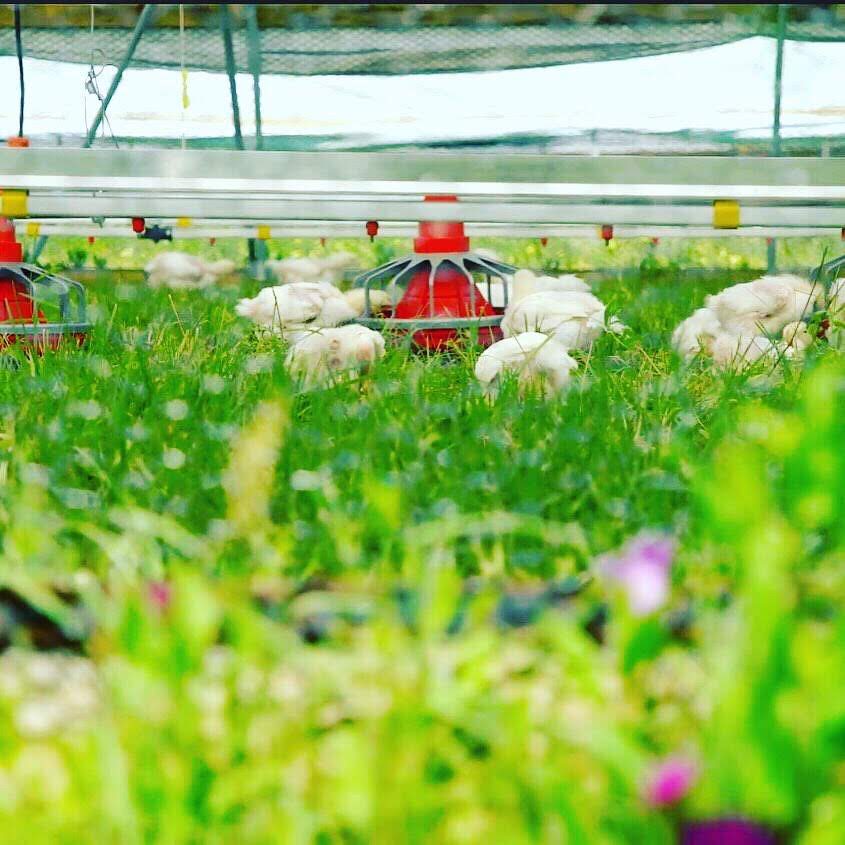
A return to more natural farming practices, like pasture-raising and rotational grazing—supports:
- Animal welfare
- Soil health
- Reduced environmental impact
And ultimately, better food.
A Different Approach
There is a growing movement toward rebuilding trust in the food system through transparency, higher standards, and accountability.
This includes farms that go beyond baseline certifications and prioritize:
- Animal welfare
- Regenerative practices
- Nutrient-dense food production
Farming methods that work with nature not against it, can produce healthier animals, healthier ecosystems, and healthier communities.
What This Means for Us
Chicken alone won’t solve the challenges facing our food system or healthcare system.
But it can represent something bigger:
A shift in awareness.
A shift in values.
A shift in how we define quality.
The symbols we choose to embrace shape the future we create. And sometimes, those symbols are simpler than we think—sitting right in front of us at the dinner table.
Make It Meaningful
What you eat says something about you.
It reflects your priorities, your awareness, and your values. Choosing better food isn’t just a personal decision, it’s a cultural one.
And small changes, over time, can reshape much larger systems.
References
British Broadcasting Corporation, (2021, December 6)
How food influencers affect what we eat
Harvard T.H. Chan, (2022)
Nutrition and Immunity
Smithsonian Magazine, (2012, June)
How the Chicken Conquered the World
United Poultry Concerns, (2002, May 17)
The Dignity, Beauty, and Abuse of Chickens: As Symbols and in Reality
Yale Daily News, (2021, April 22)
Myth, Ritual and Symbol During a Pandemic
Share:
Mental Health, Nutrition, and the Power of Better Food